

Restaurant Branding: Great Food Is Not a Strategy
Most restaurateurs believe that if the food is good enough, people will eventually come.
The problem is that customers have to choose the restaurant before they can judge the food.
They make that decision from what they can see and understand beforehand: the name, the concept, the facade, the menu, the photography, the reviews, the price point, the atmosphere, and what someone else told them about the place.
The food matters enormously. But great food can only prove its value once someone has walked through the door, placed an order, or opened the box.
Branding helps get you chosen in the first place.
And in a crowded restaurant market, that is a business problem, not a design problem.
Your restaurant is competing before the first bite
Restaurants tend to think of competition in terms of food.
Better ingredients. Better recipes. Better service. Better chefs.
Customers experience the competition differently.
They see six options on Google Maps. Three restaurants on the same street. Twenty places on a delivery app. A stream of food content on Instagram.
Before anyone tastes anything, your restaurant is already going through a series of small selection moments.
At Blackink, we call this the Selection Ladder™: noticed, understood, trusted, remembered, chosen.
We named it because we kept watching the same sequence decide which restaurants got chosen, long before the food entered the conversation.
Noticed
You have to enter consideration.
That might happen through your facade, signage, social media, packaging, delivery presence, or simply because someone mentions your name.
Being louder is not necessarily the answer. Being distinctive usually is.
The question is whether your restaurant looks and feels recognisable enough to stand apart from everything competing for the same customer.
Understood
People need to quickly understand what kind of restaurant you are.
What do you serve?
What kind of experience should they expect?
Is this an everyday lunch, a destination dinner, a quick bite, or somewhere to celebrate?
What makes you different from the restaurant next door?
If the concept needs a long explanation, the market will usually simplify it for you. And it may not simplify it in your favour.
Trusted
Restaurants involve risk.
A guest is giving you their time, money, appetite, and sometimes an occasion that matters.
A coherent restaurant brand helps reduce that uncertainty. The identity, photography, environment, menu, reviews, messaging, and digital presence should all reinforce the same expectation.
When they contradict each other, confidence drops.
Remembered
Getting someone through the door once is not the same as building a brand.
A strong restaurant gives people something they can remember and repeat.
Not necessarily a gimmick. A clear idea.
It could be a particular attitude, ritual, product, story, visual language, service style, or point of view.
If the only thing people can say afterward is “the food was good,” you may have delivered a good meal without giving them much reason to remember who served it.
Chosen
Choice is the result of everything that came before it.
This is why restaurant branding should not be treated as the logo you design once the business decisions are finished.
It is part of how those decisions become visible to the customer.
Great restaurants can become invisible
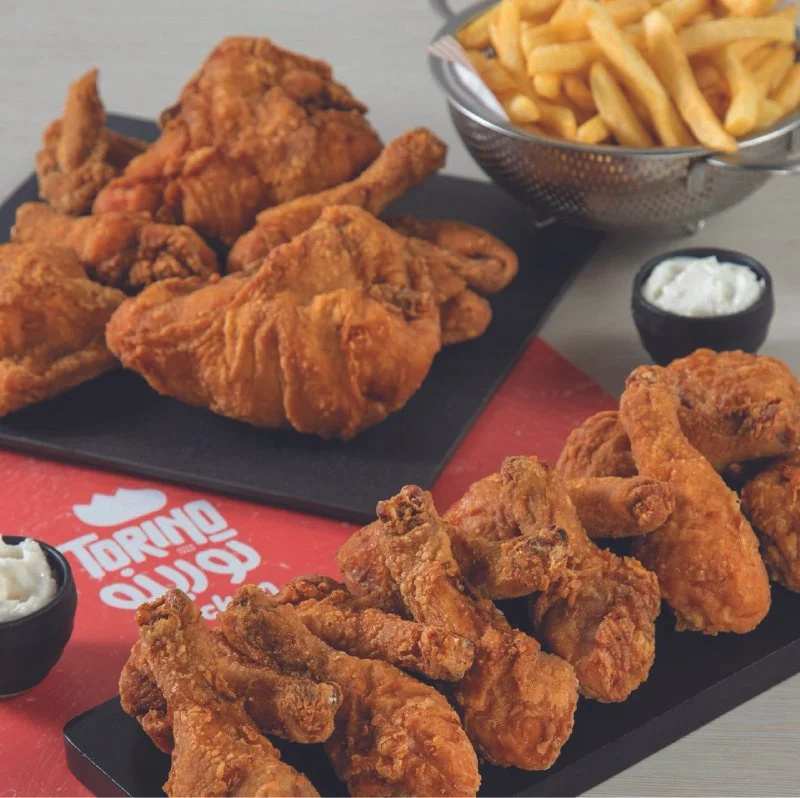
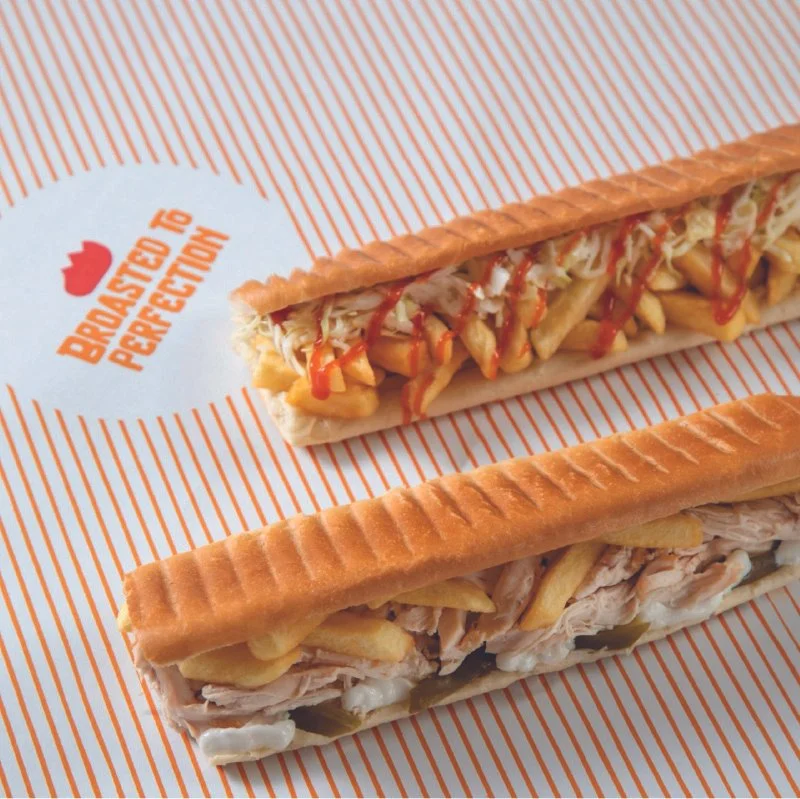
Torino Chicken is a good example.
The brand introduced broasted chicken to Lebanon in 1969 and became closely associated with the category.
The product had not suddenly become bad. But decades later, the competitive landscape had changed and a younger audience had little reason to understand what made Torino important.
The problem was not the recipe.
The brand had stopped communicating its relevance.
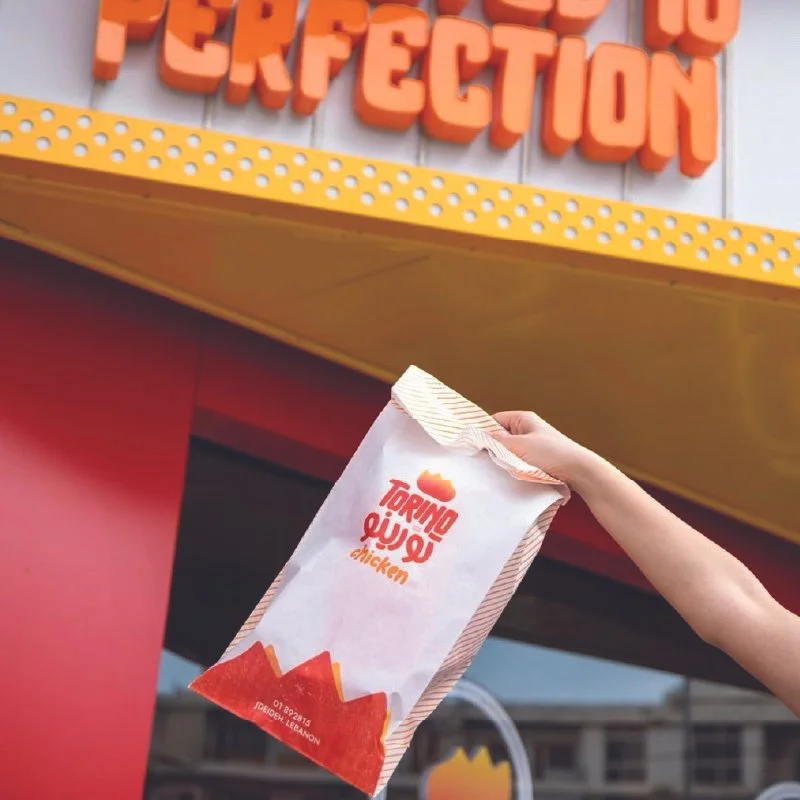
Our job was to reconnect the restaurant with what made it valuable in the first place while making that story and its history relevant to a new generation.
That meant going beyond a new logo.
We revisited the positioning, identity, messaging, packaging, and overall brand experience around a simple strategic truth: Torino was not another chicken restaurant. It was one of the brands that helped establish the category.
Within four months of the rebrand, customer flow had tripled.
The food remained the food. What changed was how clearly the market could see the value around it.
You can explore the full Torino Chicken case study.
A new restaurant concept has the opposite problem
Avolique started without decades of history.
There was no reputation to recover. Everything had to be created from scratch.
That makes the early branding decisions even more consequential.
The concept, name, story, identity, environment, and personality could not be developed as separate creative exercises. They had to work together to create one clear impression before the restaurant had built any familiarity in the market.

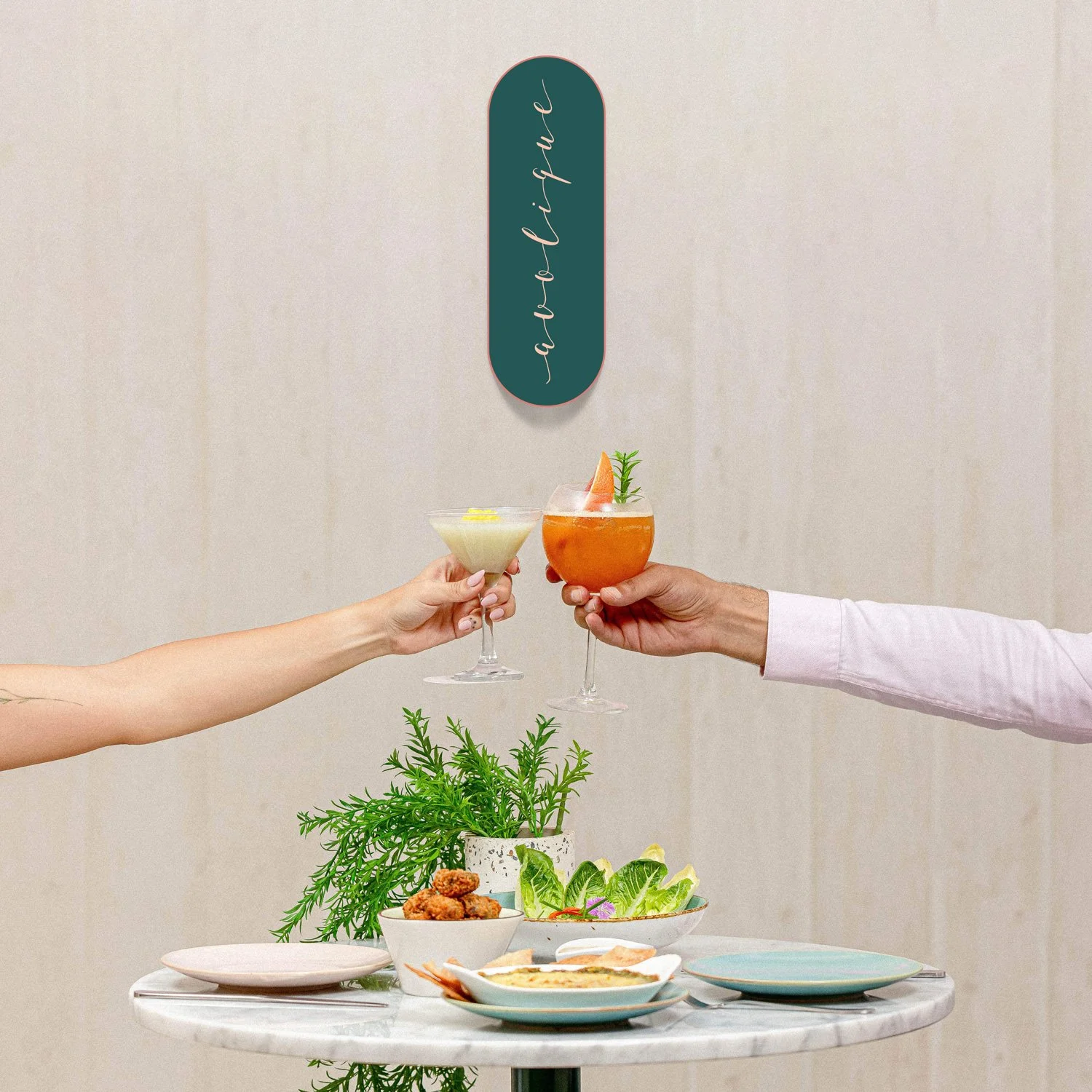


As founder Jessica Ishaya Hanna later described it, the work “played a vital role in shaping our dream project and setting us on the right track.”
You can see the Avolique case study here.
Torino and Avolique started from very different places.
But the strategic job of branding was similar:
Make the restaurant easier to understand, easier to remember, and easier to choose.
How to brand a restaurant properly
If you are launching a restaurant, the order of decisions matters.
Start with the concept, not the logo
Before choosing colours, typefaces, or even a name, you should be able to answer a more important question:
Why should this restaurant exist in this market?
Not philosophically. Competitively.
What position can it credibly own? Who is it for? What occasion is it competing for? What should people understand about it that they cannot already get somewhere else?
Once those decisions are clear, naming and restaurant brand identity become expressions of the strategy rather than attempts to invent one.
Build one idea across the whole experience
Restaurants are highly physical brands.
A customer encounters the brand through the facade, menu, uniforms, packaging, interiors, signage, music, photography, social media, delivery experience, and staff.
These should not become independent design projects.
They should feel like different expressions of the same restaurant.
That consistency is what turns branding from decoration into perception.
Give people something worth retelling
A useful test is to ask:
What do we want a customer to tell a friend about this place?
If there is no clear answer, there may not yet be a strong enough idea behind the restaurant.
The objective is not to script what customers say.
It is to give them something distinctive enough to talk about.
Build a brand that can travel
A restaurant rarely stays confined to its original format.
Delivery gets introduced. Packaging expands. A second location opens. A kiosk appears. Franchising becomes a possibility.
A restaurant brand built as a coherent system can move into these formats without losing itself.
A restaurant built mainly around a logo often has to reinvent itself every time the business grows.
When the food is good but the restaurant is not growing
For an established restaurant, the question is slightly different.
If customers who know you still like the product, but fewer new customers are arriving, the problem may not be operational.
The brand may simply have stopped connecting with the market around it.
Perhaps the concept is no longer clear.
Perhaps competitors have become more distinctive.
Perhaps your identity still reflects who you were ten years ago.
Or perhaps loyal customers understand what makes you special, but someone discovering you today does not.
That is when rebranding becomes less about changing the restaurant and more about making its value visible again.
We explore that distinction further in Rebranding a Restaurant Is About Reconnecting, Not Reinventing.
Is your food better than your foot traffic?
If the product is strong but the market is not responding, it is worth looking beyond the kitchen.
Where are people losing you?
Are you being noticed but not understood?
Understood but not trusted?
Tried once but not remembered?
Those are branding questions.
A Clarity Call with Blackink is a focused conversation to identify where the gap may be and what deserves attention first.
Blackink is a restaurant branding agency specialising in brand strategy and identity. Founded by Riad Mouawad, we work with restaurant and food brands across Beirut, Montreal, and international markets. Explore our restaurant branding services.